


Cystitis often makes women worried.And of course, they are interested in how to cope with this disease quickly and without unwanted consequences.Which treatment method will be most effective in providing not only rapid relief of painful symptoms but also a complete recovery?In addition to drug treatment, you can use traditional methods after mandatory consultation with a doctor.Timely and complete treatment will give quick results.
First symptom
Acute cystitis always occurs suddenly, after stress, viral infection, hypothermia or any other factor that weakens the local immunity of the bladder.
Among the first symptoms in women are a frequent need to go to the toilet, pain when urinating, and pain in the lower abdomen.Furthermore, the more difficult it is to clean, the more often women feel the need to go to the bathroom.In severe cases, they occur every half hour.
The pain haunts the patient day and night.Stomach pain both inside and outside when urinating.Feeling of discomfort and pain in the abdomen.
Frequent attacks lead to contraction of smooth muscle, the muscle that releases urine.At the same time, internal pressure increases, even a small amount of urine accumulation leads to a feeling of urge.
Urine on examination is cloudy.The decrease in transparency is due to the accumulation of bacteria, epithelium, white blood cells and red blood cells in the urine.
Blood may be found at the end of urination.Its origin is a loose and inflamed mucous membrane of the bladder.
Another symptom is increased body temperature.With chronic cystitis, it can remain at normal levels.
How to distinguish chronic from acute cystitis?
The clinical picture of chronic cystitis in women, or rather its exacerbation, is no different from acute inflammation.But the symptoms are less pronounced.For example, body temperature may not increase or stay low.The pain is not as pronounced and the frequency of urination is not as high as in acute cases.
In addition, chronic cystitis in women very rarely occurs on its own.Most of these exacerbations occur against the background of existing pathology of the bladder, ureters, kidneys or urethra.Therefore, if a woman, based on the existing symptoms, is diagnosed with diverticulosis, tumors, stones, chronic pyelonephritis, cervical sclerosis, then there is a possibility of chronic cystitis.
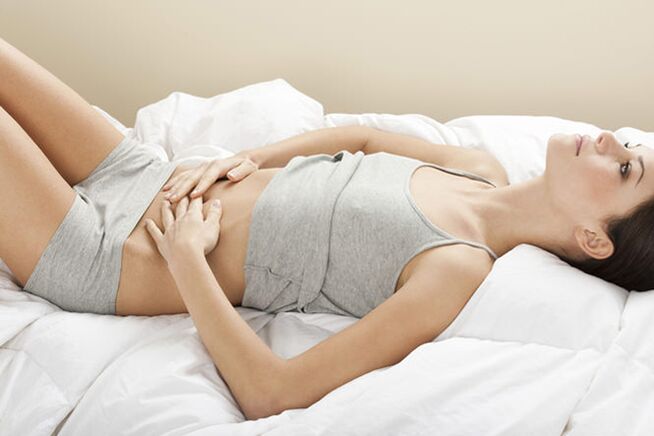
Cystitis during pregnancy and menopause
Pregnancy is a period of high risk for cystitis.The hormonal background changes, namely, the level of the hormone progesterone increases, the smooth muscles of the urethra relax and the opening widens.This makes it easier for E. coli as well as other bacteria to enter the bladder and cause inflammation there.
Symptoms of cystitis during pregnancy are in many ways similar to the course of the disease in non-pregnant women.However, if there is no pain when urinating and the only symptom is frequent urination, cystitis may not be detected in time.This is because during pregnancy, the uterus will be compressed and the frequency of urination increases as usual.Therefore, to rule out this possibility, all pregnant women from the 20th week of pregnancy have their urine analyzed monthly and from the 30th week every 7 days.
Cystitis in postmenopausal women also occurs frequently.This is due to impaired reproductive function and, consequently, changes in female hormone levels.Estrogen decline not only affects the genitals but also the bladder.Its mucosa changes, becoming thin, loose and easily damaged.
Clinical signs (symptoms) of cystitis in women during menopause are not specific.
Disease treatment
In addition to keeping the woman in bed, drinking plenty of water and excluding irritating foods from the menu, as soon as the first symptoms appear, the doctor will prescribe treatment according to medical history.What drugs are used for treatment?
- First of all, these are antibiotics
Taking antibacterial drugs in most cases will lead to significant improvement within 3–4 days.Usually, in urology, depending on the severity of the condition, medical history, presence of associated pathology and test results, protected penicillins, cephalosporins, aminoglycosides, fluoroquinolones and nitrofuran drugs are prescribed.
- Combine antibiotics with antispasmodic and pain relievers
For chronic cystitis in women, the medication is injected into the bladder.Silver nitrate, sea buckthorn oil and rosehip oil are used.They have anti-inflammatory and antiseptic effects.And importantly, they only affect the area of inflammation and do not affect the entire body.
What folk remedies are used for cystitis?
Among people suffering from cystitis, decoctions and infusions of various herbs and berries are popular for treatment.Anti-inflammatory, antiseptic, antispasmodic and weak diuretic effects have:
- horsetail,
- strawberry,
- cranberry,
- knot,
- strawberry leaves,
- chamomile decoction,
- kidney tea.
Herbal decoctions acidify the urine, making it unsuitable for bacterial growth.In addition, drinking a decoction increases the amount of fluid taken per day, which leads to increased urine output and thus the bladder is cleansed of infections.
For maximum therapeutic effect, the decoction must be used fresh.You can buy this herb at the pharmacy, where it has already been dried, checked for the absence of parasites and packaged.
Cranberries are rich in benzoic acid, which has antibacterial and antiseptic properties, as well as flavonoids, which can eliminate free radicals.You can make fruit drinks or juices from berries.For fruit juice, take 0.5 kg of cranberries, wash and grind in a blender or mortar.Filter through cheesecloth, put into a jar, pour in about 2.5 liters of cooled boiled water, season to taste.
Prepare juice from a small amount of berries and drink immediately.Warm the cranberries a little so they release their juices better and chop them finely.Then squeeze through several layers of gauze.
Traditional recipes work well as a supplement to treatment prescribed by your doctor.Remember to consult your doctor to see if traditional treatments are appropriate and harmless.